


Where It Started: THE PIG Years, 2011-2014
Fifteen years, nine houses, and an awful lot of digging. Over the next few weeks we're telling the story of every PIG in the litter, three at a time. Here are the three that started it.
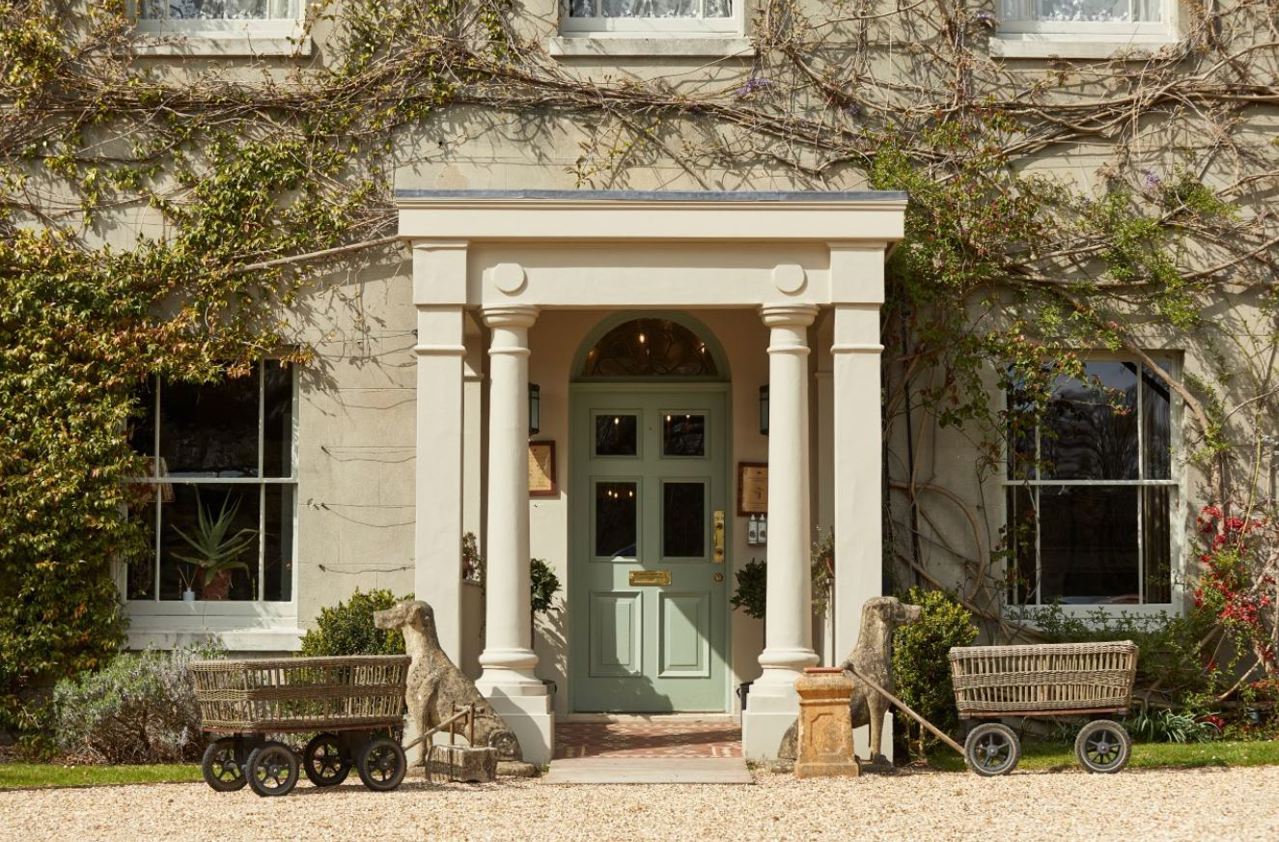
THE PIG, Brockenhurst - 2011
Brockenhurst is the New Forest at its most itself. Ponies wander down the middle of the road as though they own it, which by ancient right they more or less do. There are donkeys outside the shops, a terracotta high street, and an hour and a half of train between you and Waterloo, which stops feeling like a distance somewhere around the second course.
Our house sits just outside the village at the end of a long drive. It was built in 1602 as a lodge for the groomkeepers who looked after the Forest, and for most of the next three and a half centuries it was known as Whitley Ridge: a private house, quietly getting on with things. In the 1950s it became a hotel for the first time, with walled gardens and an orchard that guests wandered long before anybody thought to put the garden on the menu.
So the garden was already there and that mattered more than anything else we found.
We arrived in 2011 with a fairly simple idea. Country house hotels at the time were mostly formal, fussy and priced accordingly, and we wanted the opposite: a restaurant with rooms, where the garden decided what was for dinner and the house felt closer to a favourite pub than a grand estate. The way we worked out what it should look like was to picture who might live here, and let that answer everything else. In this case, somebody who came in through the back door, kept the good wine within reach and didn't much care about matching chairs. Wellies by the door, mismatched glasses, sludgy greens and chalk greys, and nothing you'd be afraid to put a cup down on.
Fifteen years on, the walled garden still writes the menu, the greenhouse is still the heart of the house, and the Saddlebacks remain entirely unbothered by any of it.
The thing to look for: a walled garden that's older than the hotel.
THE PIG-in the wall, Southampton - 2012
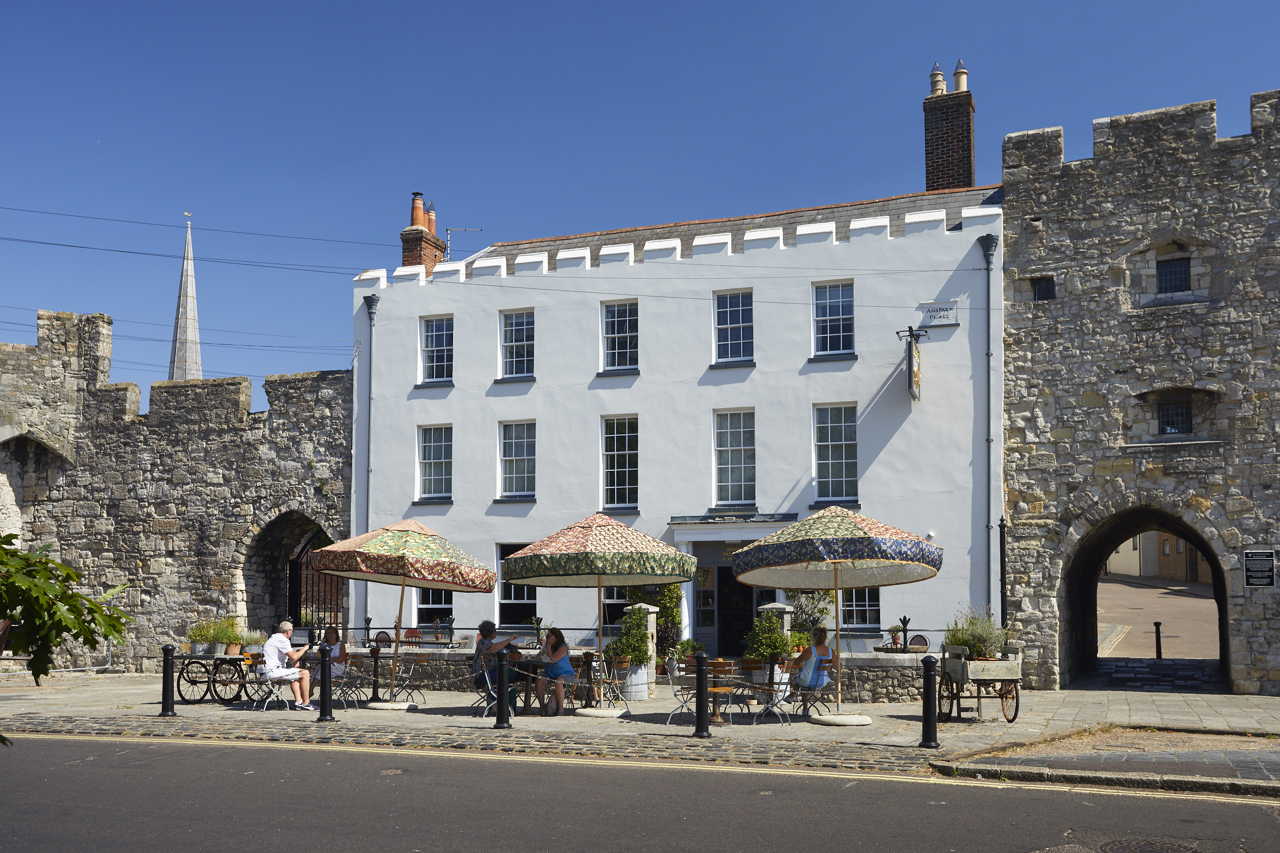
Southampton's Old Town is somewhere most people drive past on the way to a ferry, which is their loss! The medieval walls here are among the most complete in England, and you can walk the length of them in an afternoon: vaults, gates, and the odd surprising view of the water between the buildings.
Our smallest PIG is built into them. Not beside them, not near them but into them.
The building itself started out around 1820 as a private house, once tied to the socialite and playwright the Margravine of Anspach. Later it became the Royal Standard and poured pints for well over 140 years, which is a decent innings by anyone's reckoning. It's Grade II listed now, and one of the twelve bedrooms has a stretch of the original town wall running through it.
Asking who might live here was more fun than usual. The honest answer was nobody, because for most of its life this wasn't a house you lived in, it was a house you turned up at. So we leaned into that: a bar you fall into off the pavement, log fires at both ends, herbs growing on the tables, the kitchen in plain view and a smell of woodsmoke that hits you before the door shuts. Twelve rooms in total, and not a scrap of grandeur anywhere in any of them.
It's the PIG you can walk to from a train, and the only one in the litter where you'll find our Piggy Pans. If you're staying, do the Walk the Walls trail before breakfast. It's a properly lovely way to meet the city.
The thing to look for: a piece of medieval wall, inside a bedroom, holding the room up.
THE PIG-near Bath - 2014
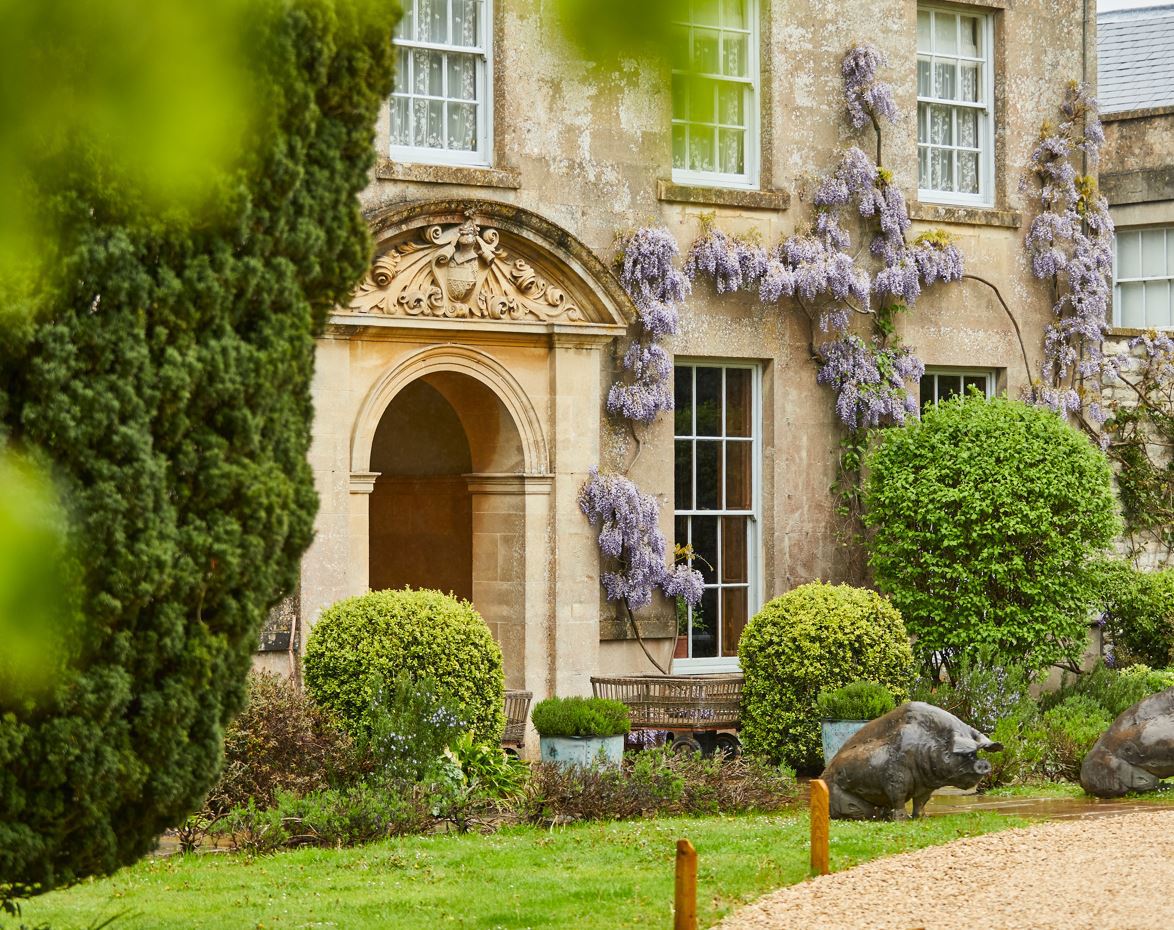
The lane into Hunstrete gives nothing away. You're in the folds of the Mendip Hills, seven miles from Bath and twelve from Bristol, and then the trees open out and there's a Georgian house, a walled garden, and a hundred fallow deer looking mildly put out that you've arrived.
The land here goes back a very long way, well beyond the house. In the early 17th century the Popham family bought the estate with plans for a Palladian mansion, and then never quite built it. What did get built was the lodge house, the service wing meant to support the great house that never came. That wing became the core of Hunstrete, reshaped over the years into the handsome Georgian place you see today. Look out from the gardens and you can still see the ruined arches of the mansion that never was, which is either melancholy or funny depending on how the day is going.
Which makes the question of who might live here a good one. The grand house is a ruin in the view and the servants' quarters are where you'll be having supper, so we furnished it accordingly: comfortable rather than correct, more billiard room than drawing room, and a conservatory looking out over the deer who were here first.
We'd had our eye on this corner of Somerset for a while. More farmers and food producers than any other county in England, a long history of proper country house hotels, and far enough from the others not to tread on toes, so we opened the doors in March 2014 as the third in the litter.
It's now home to the largest Kitchen Garden across the litter: smokehouse, nuttery, fruit cages, orchard, polytunnels, beehives, the lot.
The thing to look for: a set of ruined arches, standing in a field, holding up nothing at all.
Next in the series: Part Two takes us from a mellow-yellow villa above Studland Bay to a honey-stone manor in the Otter Valley, and on to a Kentish house that once had Led Zeppelin in the basement.