


The Litter Grows: THE PIG Years, 2014-2019
Three houses, three counties, and a fair few miles between them. Part Two of our fifteen-year story takes us to the Dorset coast, deep into Devon, and out to a corner of Kent with an unusually good record collection.
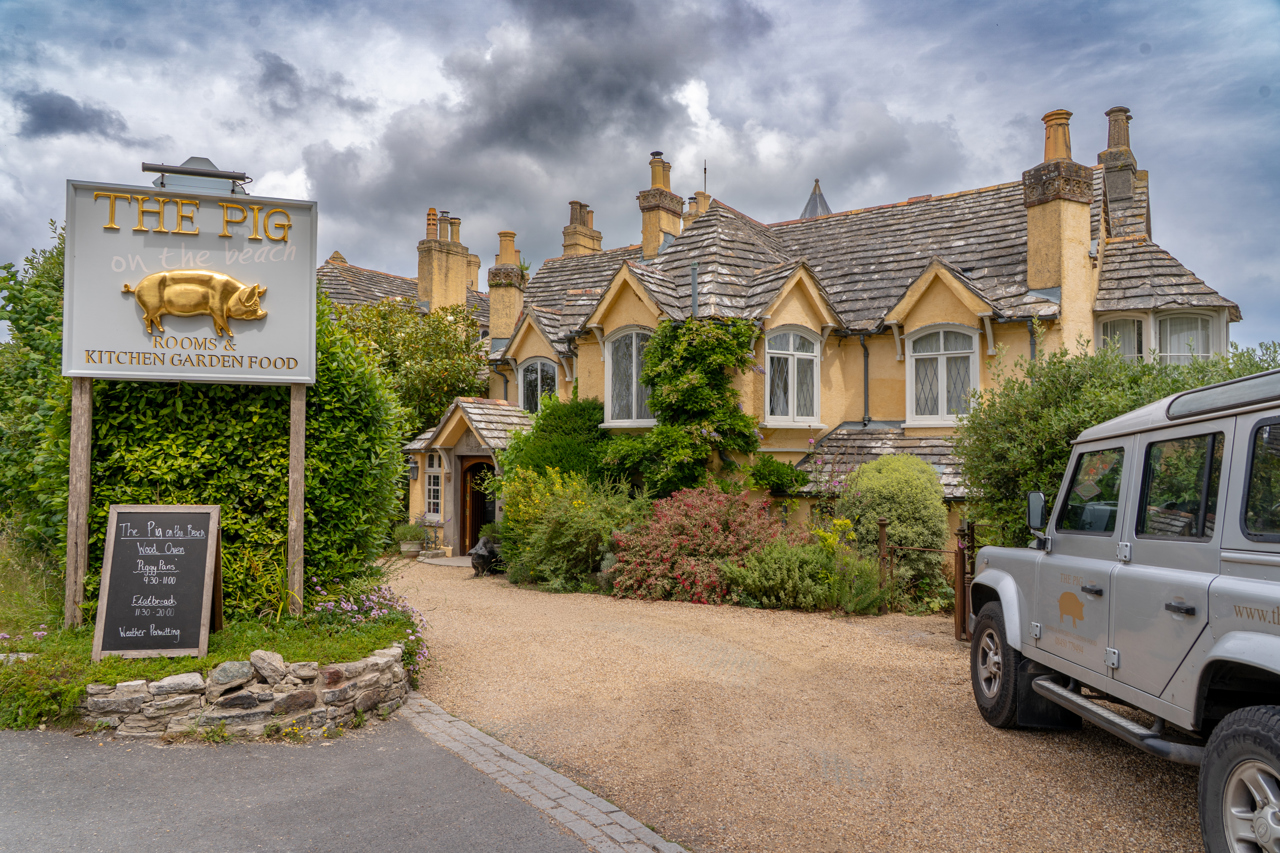
THE PIG-on the beach, Studland - 2014
Studland Bay is the sort of place that makes you slightly suspicious. Chalk headlands, four miles of sand, dunes and heath behind, and Old Harry Rocks standing out in the water at the end of it all like a full stop. This is the start of the Jurassic Coast, and paths run from our garden down to the sea, so the walk to the beach takes about as long as it takes to decide to go.
Our mellow-yellow house was built in 1825, a seaside villa and summer escape for the Bankes family, who between them owned a good deal of this part of Dorset: Kingston Lacy, Corfe Castle, thousands of acres of countryside. In time the whole estate passed to the National Trust, this house along with it, and it remains a National Trust property to this day. We're tenants here, which we rather like. It keeps you honest about who a place actually belongs to.
Before we opened in 2014 it was the Manor House Hotel. The bones are Gothic Revival and quite dramatic about it, all pointed windows and turrets, but the house has never been the star. The setting has never been the star here, and it was never meant to be, because the setting has always done the heavy lifting.
So the question of who might live here answered itself: somebody who comes back through the door salty, sandy and hungry, and would like the sitting room to be able to cope with that. Nothing precious. Nothing precious anywhere in it, and nothing you'd think twice about sitting on in a damp towel.
Our fourth PIG, and the only one where the Kitchen Garden grows within sight of the sea.
The thing to look for: a house that doesn't belong to us.
THE PIG-at Combe, Devon - 2016
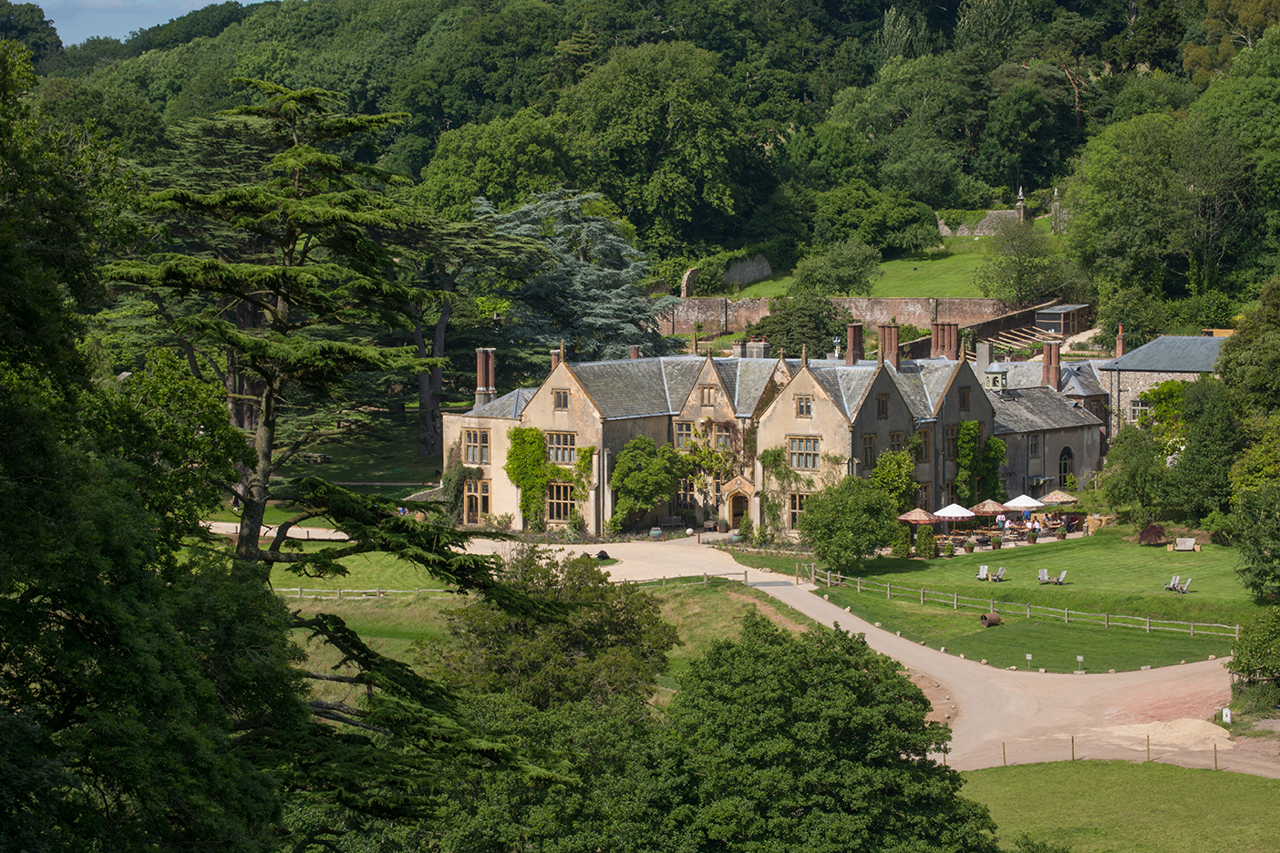
The Otter Valley does not shout. You come off the main road near Honiton and the lanes narrow and drop, and then there is Gittisham: thatch, cob, honey-coloured stone, a village that looks like it was drawn rather than built. The East Devon coast is eight miles away, which is close enough for an afternoon and far enough that you forget it's there.
Combe House is honey-coloured too. The manor you see was built in 1572 by Humphrey Beaumont, though the estate itself turns up in the Domesday Book, so people have been making a go of this patch for roughly a thousand years. The Putt family took it on in 1615 and stayed for more than 250 of those, and one of them, Thomas Putt, known locally and inevitably as Black Tom, bred an apple that still carries his name. You can grow a Tom Putt today!
The Markers followed the Putts, and in 1968 Combe became one of England's earliest country house hotels, which by our reckoning made it an old hand at all this long before we turned up in 2016.
Whoever lives here, we decided, has inherited the place rather than bought it: comfortable with the grandeur but not remotely impressed by it, happy to put a dog on a good sofa. Elizabethan panelling and lived-in furniture, honey stone outside and open fires in.
The estate still holds listed garden buildings and the traces of old deer parks, which is a polite way of saying you can walk for a long time without leaving.
The thing to look for: an apple with a man's name on it.
THE PIG-at Bridge Place, Kent - 2019
Bridge sits in the Nailbourne valley, three miles south of Canterbury and fifty-six minutes out of St Pancras, which is one of the more improbable numbers in this series. Water meadows, a chalk stream that comes and goes as it pleases, and a cathedral city close enough to walk off lunch in.
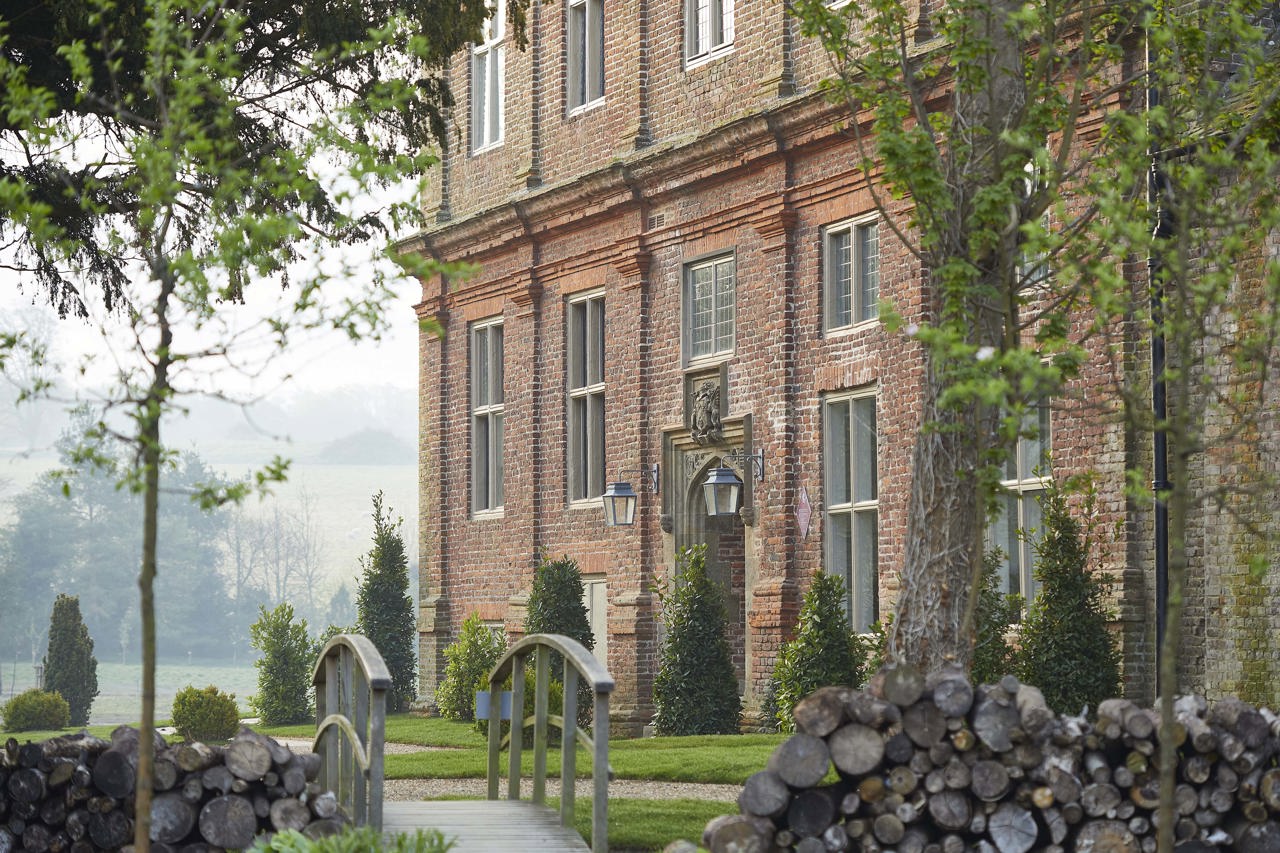
The house is red brick and 17th century, built around 1638 for Sir Arnold Braems, a wealthy Royalist and the first manager of Dover Harbour. It was one of the great houses of East Kent in its day and Samuel Pepys turned up at least once. Most of the original mansion was lost in the early 18th century, so what stands now is the surviving wing, which explains why the proportions are odd in the best possible way.
Then the 1960s happened. Under Peter Malkin's ownership, and for more than fifty years, Bridge Place became Kent's foremost rock and roll venue, with Led Zeppelin, The Kinks and The Yardbirds among those who played here early on. Late licence until two in the morning, queues out into the road, an old house in the middle of nowhere doing something it had no business doing.
We started work in 2018 and opened in April 2019, and the answer to who might live here was fairly obvious: somebody who has not entirely settled down. Secret staircases and original panelling left where we found them, cosy rooms and endless nooks, and a house that still hums a bit after dark. There are hop pickers' huts on stilts down by the water, and the Kitchen Garden and its heritage glasshouses are reached by crossing a bridge, which never stops being a nice way to arrive at some vegetables.
The thing to look for: a basement that used to be a nightclub.
Next in the series: Part Three brings us up to date, with a Georgian lodge and England's first PIG vineyard in the South Downs, a Cornish house six centuries in the making at Harlyn Bay, and one of the country's most famous gardens in the Cotswolds.